Most of Pokhara's e-waste still works
An estimated 7,00,000 kg of electronics are discarded in Pokhara every year — and more than 70% of the parts inside still work.
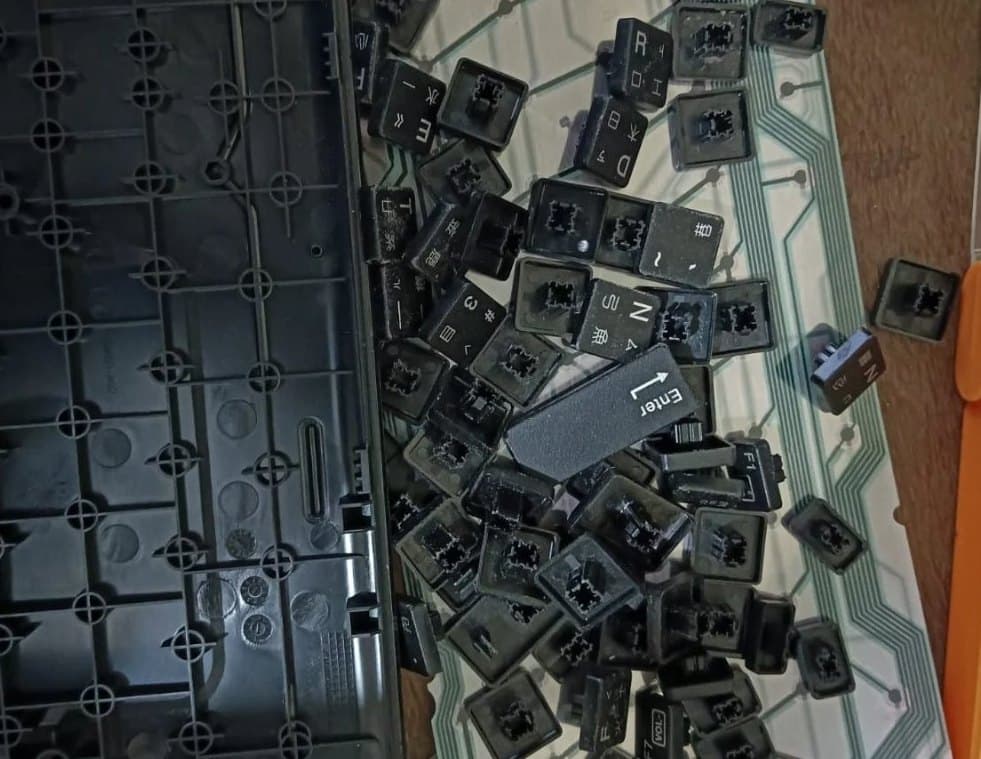
Every phone, keyboard, charger and hard drive we throw away contains parts that were built to last far longer than the device around them.
The scale of the problem
On average, each person generates about 1.4 kg of e-waste a year. With roughly 5,00,000 residents, that adds up to an estimated 7,00,000 kg in Pokhara every year — and electronics are being discarded faster than they can be recycled.
It's a global problem too. The UN's Global E-waste Monitor 2024 found that a record 62 million tonnes of e-waste was generated worldwide in 2022, and only 22.3% was documented as properly collected and recycled. Nepal generated an estimated 28,000 tonnes in 2019 (Global E-waste Monitor 2020) and still has no dedicated national e-waste law, so most of it is handled informally.
Most of it isn't really waste
When we sort what we collect, we find that more than 70% of the motors, LEDs, copper coils and switches still work perfectly. They end up in landfill only because the product around them broke or went out of date.
What we do with it
- Collect discarded electronics from communities, organisations, drop-off hubs and repair centres.
- Separate & disassemble them safely, recovering and testing reusable components.
- Create — working parts become affordable DIY robotics toys for students, and circuit boards and copper become clocks, lamps, stands and wall art that people actually use.
- Teach — in our robotics training and repair sessions, students learn to fix devices and build with recovered parts, so fewer things get thrown away in the first place.
Our goal
Our business plan targets 118 kg of e-waste upcycled every month — 1,416 kg a year — and 5 green jobs. These are targets, not yet results, and we'll report our progress here.
Have old electronics, or a school that would love affordable robotics? Get in touch.
E-wastePokharaUpcycling